⠀
PA6020
⠀
⠀
⠀
CW1A
Professional Launch Portfolio
⠀
Brand Positioning Rationale
⠀
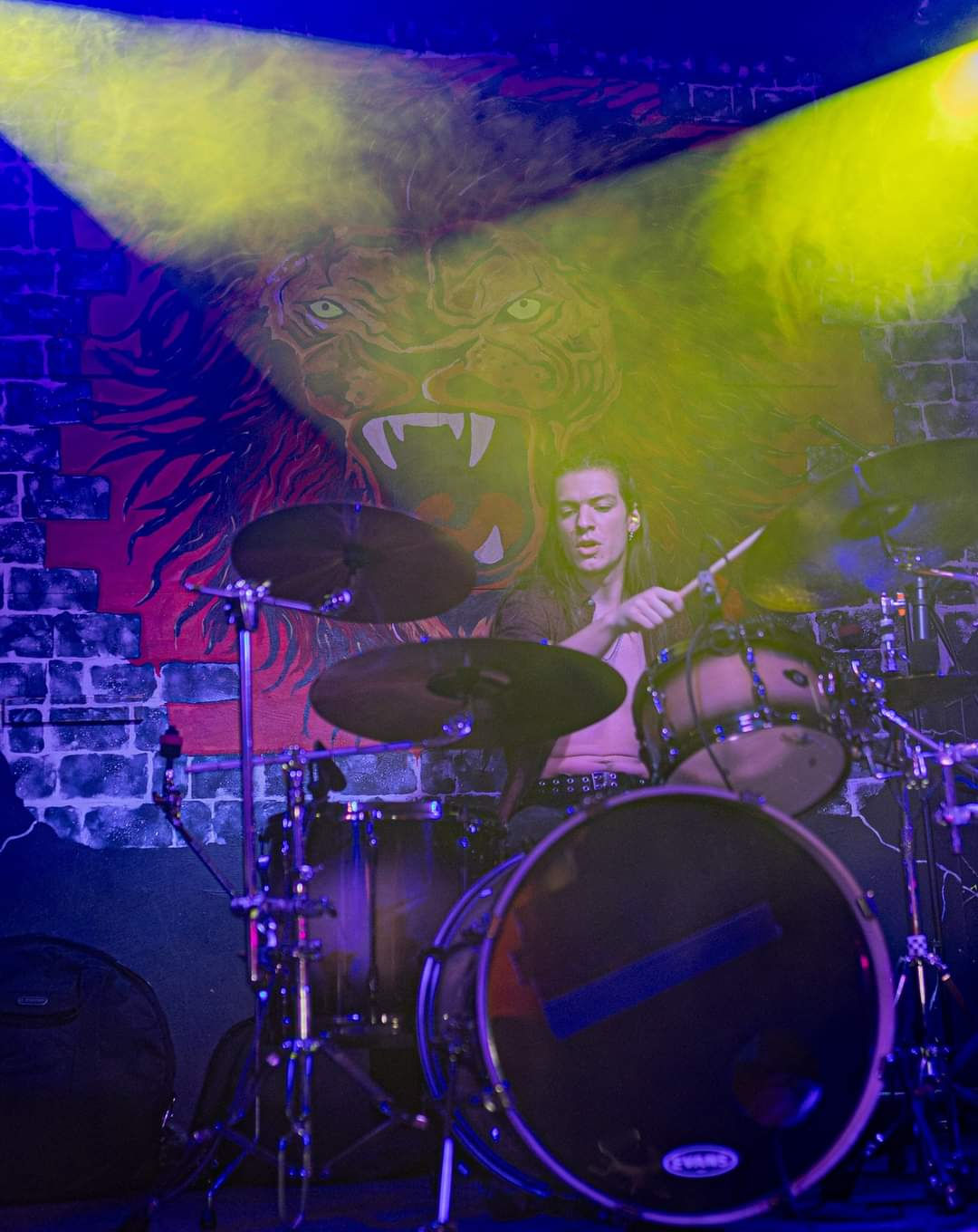
I am Daniele Ferrazza, a drummer, audio engineer and actor from Kent, and my brand is built around versatility, collaboration and creative adaptability,. I am prospecting to expand my skills and position in the music industry and become a full time session musician and studio owner.
In terms of my own music, I do not limit myself to genre and my solo music is more experimental and avant-garde, as I enjoy exploring unusual sounds, structures and creative approaches. In terms of the bands that I perform with, the genres range from Indie Rock and Pop Punk, with One Hash Brown and Purple Propaganda, to Blues and Jazz, with the Gravesend Borough Band and ORB a band who I perform with in Farringdon, this is supported and argued as Berklee (2004) identifies versatility, improvisation, stylistic knowledge and collaboration as key skills for session musicians.
My target audience depends on the project, for instance, my solo work is aimed at listeners who enjoy experimental and alternative music, while One Hash Brown's target audience is those who enjoy music inspired by Arctic Monkeys, Green Day and Fall Out Boy.
In terms of my music production, it is best suited for local musicians who enjoy in-person interactions.
My main influences are Fall Out Boy, Bring Me The Horizon, Mac DeMarco and Home, to name only a few artists who influenced my interest in energetic performance, alternative music identity, lo-fi production, atmosphere and electronic texture.
My strongest asset is my ability to be versatile in my drumming style and production techniques, allowing me to adapt to each genre effortlessly, as well as my style of collaboration, as I also use “jamming” and improvisation as part of my collaborative process, helping artists develop ideas naturally and encouraging creative thinking.
Overall, I want my brand to be recognised as versatile, approachable and professionally adaptable. UK Music (2024) reports that a high proportion of people working in music, performing and visual arts are self-employed, which shows the importance of being flexible, skilled and able to manage different types of work.
⠀
⠀
⠀
Revenue Strategy & Sustainability
⠀


⠀
I selected these revenue streams because they reflect a realistic portfolio career, rather than relying on one single source of income. The split includes short-term work such as session recording, live performance and production, alongside longer-term opportunities such as royalties, teaching/workshops, theatre and film, and social media promotion. This matches how many musicians now build sustainable careers by combining performance, technical skills, collaboration, self-promotion and entrepreneurial activity. My research was based on looking at industry data and career guidance, including UK Music’s (2025) recent figures showing that the UK music industry contributed £8 billion to the UK economy in 2024 and supported 220,000 jobs, which shows that there are opportunities, but also fairly high competition. I also considered evidence from other areas like the Musicians’ Union (2012), which identified that many musicians need to develop a proper portfolio career made up of different types of work, including performance, teaching, business skills, marketing and community engagement to list but a few. The Musicians’ Census also shows why this approach is important, as many musicians face unstable income and need to combine different types of paid work to sustain their careers (Help Musicians and Musicians’ Union, 2023). This is why I have included both transactional income, such as session work, direct sales and royalties alongside collaborative income, such as live performance, production, teaching, theatre and film. From an entrepreneurship perspective, the aim is to use my current skills as a drummer, audio engineer, performer and actor to create several connected income streams that reduce risk and help me grow my professional identity over time.
⠀
⠀
⠀
References⠀
Berklee (2004) Session Musician. Available at: https://www.berklee.edu/careers/roles/session-instrumentalist
Help Musicians and Musicians’ Union (2023) Musicians’ Census: Summary Report. Available at: https://musiciansunion.org.uk/news/first-ever-uk-musicians-census-provides-unparalleled-insight-into-the-careers-of-the-uk-s-musicians
Musicians’ Union (2012) The Working Musician. Available at: https://musiciansunion.org.uk/working-performing/education-and-teaching/music-education-policy-and-reports/the-working-musician-report
UK Music (2025) This Is Music 2025. Available at: https://www.ukmusic.org/research-reports/this-is-music-2025/
UK Music (2024) This Is Music 2024. Available at: https://www.ukmusic.org/research-reports/report-archive/this-is-music-2024/
⠀
⠀
CW1B
Enterprise Pitch
⠀
Presentation⠀
CW2A
Critical Reflective Essay
⠀
Introduction⠀
Across my degree, I have engaged with a variety of aspects of music and acting and my identity has developed from being mostly performance-focused to becoming more all rounded and aware of myself as a versatile creative individual. Now, as I am approaching the end of the course, I understand that a career in the creative industries is not built only on talent or technical skill but also requires confidence, communication, adaptability, collaboration and the ability to present myself professionally.
In this reflection, I will explore the professional growth I have undergoneacross the degree, including the challenges I have experienced and the values that now guide my practice and the professional identity which I am continuing to build. I will make use of Gibbs’ Reflective Cycle (1988) as theframework is directly applicable to this situation because it supports structured reflection by moving from description to feelings, evaluation, analysis, conclusion and action planning, allowing me to look back and make solid consideration as to the learning I had made and what could I improve upon next time.

⠀
⠀
⠀
Growth Across Degree
At the beginning of my degree, I only saw myself as a drummer with an interest in the industry and my confidence came from performing, rehearsing and theatre. As I progressed through the course, I began to understand that flexibility in environments is vital, as the creative industries require people who can adapt, collaborate, manage themselves and communicate their value to others, as argued by Bridgstock (2009). Thus, I have had to consider how I position myself, build a reputable business and become a recognised professional with a sustainable future.
Creatively, I have become more open and confident in working across different styles, learning that I should not limit myself to one genre as my music sits more within experimental sounds, while the bands I perform with fit into more conventional genre categories. My versatility has become one of the critical elements of my identity, meaning I can operate in different musical spaces and still bring my own creative judgement without lacking direction.
Technically, through live performances and recording in different venues, I have become more aware of how sound is shaped through recording methods and production decisions, and I have realised that professional creative work depends on delivery despite the technical difficulties that one experiences.
My confidence has grown from being placed in situations where I had to step outside my comfort zone in projects where I occasionally did not know the rest of the team or have access to the full picture in advance, some examples being the hosting of Signals East and Purple Propaganda’s performance at Hemelfest. Reflective practice is important here because it helps turn experience into learning rather than simply moving from one project to another, moving away from conceptual proactiveness to a realm actual decision-making process as advanced by Simon H. in 1956 and cited by Yongfang & Jianmin (2024).
I have also become more aware of wellbeing. Creative work can be exciting, but deadlines, performance expectations, comparison with others and uncertainty about the future may affect motivation, thus I have learned that looking after myself is part of professional development. This includes managing workload, being realistic about commitments and understanding when I need to rest. If I want a long-term career in music, I need to build habits that are sustainable rather than relying only on motivation or last-minute energy.
⠀
⠀
⠀
Signals East:
Professional Identity In Action
My role as one of the hosts of the Signals East event at UEL in March 2026 was one of the most important professional experiences of my degree. As host, I had to be visible, speak to people, introduce parts of the event, maintain energy and help create a positive atmosphere. This tested a different side of my professional identity because it required confidence, communication and responsibility.
At the time, I felt nervous but also excited as I knew that hosting required preparation, but I also understood that live events are unpredictable, as such when my co-host and I were tasked with filling 20 minutes of intermission between two of the acts.
The experience was positive because it allowed me to develop confidence in a live professional context. I had to think about tone, body language, clarity and timing - all transferable skills for my future career, as I will need to communicate with clients, collaborators and audiences.
If I were to host the event again, I would prepare more short linking comments in advance and leave space for natural interaction. This experience shaped my understanding of collaboration because I realised that a host supports the whole event; the role is not about taking attention away from others, it is about helping the event work smoothly and making other people feel included.
⠀
⠀
⠀
Challenges, Wins & Key Insights⠀
One of the biggest challenges across my degree has been understanding how to define myself professionally as I have sometimes found it difficult to describe my identity clearly. This challenge revealed a gap in my self-promotion. However, professional visibility matters, as recent discussions around music careers show that sustainability in the music industry is complex and often uncertain, meaning that creative professionals need to think carefully about identity, employability and long-term career planning (Musgrave, 2025).
Another challenge was performing with one of my bands Purple Propaganda at Hemelfest in 2025, an annual event in Hemel Hempstead promoting local performers and businesses. Communications between the event manager and the band was managed by one of the band members and it became evident that organisation was not a key skill for him, leading to miscommunications and confusion. The band was informed the performance would be held on the central stage with all amenities and compensation, which had not been disclosed. However, the band arrived on site and were instead told that the performance would be delivered from a gazebo with a PA system and a single free drink was given instead of payment. Eventually, after additional discussions I was ultimately compensated for the fuel cost, but we still had to pay for hospitality and food, exacerbating the disappointment. Through this experience I have learned that to operate professionally, independently or as a group, there must be clear communication at all levels from all parties, including the use of contracts to cement agreements and avoid disappointments.
One significant achievement has been hosting Signals East successfully, despite experiencing difficulties and having to operate outside my usual comfort zone. It gave me evidence that I can speak publicly and manage pressure, as I had to read the room, keep people engaged and make sure the event felt connected.
The key insight I have gained is that my identity is still developing and what matters is that I understand my values, recognise my strengths and keep improving the areas that need development.
⠀
⠀
⠀
Values & Future Vision⠀
My emerging professional identity is based on versatility, collaboration, reliability and creative curiosity. I strive to be recognised as someone who can adapt to different musical styles and creative environments while continuing to bring in the right level of commitment and professionalism. I value authenticity, but I also understand that authenticity must be supported by discipline.
Signals East helped me to understand that I can contribute to creative environments in more than one way. Hosting the event allowed me to showcase that I can be a communicator as well as a musician, which matters to me as in my future pursuits my ambition is a studio ownership which would require exactly this combination: technical knowledge, people skills, organisation and confidence.
Clearly there are still skills I need to develop, as I need to improve my business knowledge, especially around studio management, client communication, marketing, and long-term planning. I also need to keep strengthening my public-facing confidence, as hosting Signals East was a step in the right direction and I should build on what I learned though that experience by taking more opportunities to present, network and speak about my work more publicly. My future vision is to become a creative professional, someone who is not limited to one role and has a clear identity based on adaptability, quality, flexibility, professionality and collaboration.
⠀
⠀
⠀
Conclusion⠀
Across my degree at UEL, I have developed a significant number of skills and have learned that learning does not end with the degree, my growth has been creative, technical and personal; hosting events such as Signals East at UEL was especially critical as it tested my confidence by placing me in unchartered waters where I had to use all of my skillset to effectively communicate and operate in a live professional environment. It demonstrated to me that my identity is not only based on being a musician, but also on being able to connect with people, support creative work and take responsibility. Moving forward, I will continue to develop as a session musician and audio engineer, adding business and management skills to enhance my practice.
⠀
⠀
⠀
References⠀
Bridgstock, R. (2009) ‘The graduate attributes we’ve overlooked: enhancing graduate employability through career management skills’, Higher Education Research & Development, 28(1), pp. 31–44. DOI: 10.1080/07294360802444347.
Gibbs, G. (1988) Learning by Doing: A Guide to Teaching and Learning Methods. Oxford: Oxford Polytechnic.
McKie, A. (2025) ‘See saws and sandboxes: enabling meaningful reflective practice in art and design teaching’, Art, Design & Communication in Higher Education. Available at: University of the Arts London Research Online.
Musgrave, G. (2025) ‘#WeAreViable, aren’t we? Music careers, state support and artistic career sustainability’, International Journal of Cultural Policy. DOI: 10.1080/09548963.2025.2534379.
UK Music (2026) This Is Music 2025: Employment across the music industry higher than ever. London: UK Music. Available at: UK Music website.
Yongfang, L., Jianmin, S. (2024). Intuitive Decision-Making Model. In: The ECPH Encyclopedia of Psychology. Springer, Singapore. https://doi.org/10.1007/978-981-99-6000-2_1299-1